Seriously investigating the strangest, most incongruous subjects, trying to understand supernatural phenomena, simply describing them, exposes us to remaining confined in a gray area. That of the anomaly, the anecdotal, the fantasy, a dark side of our rationalism which is only tolerated in marginality.
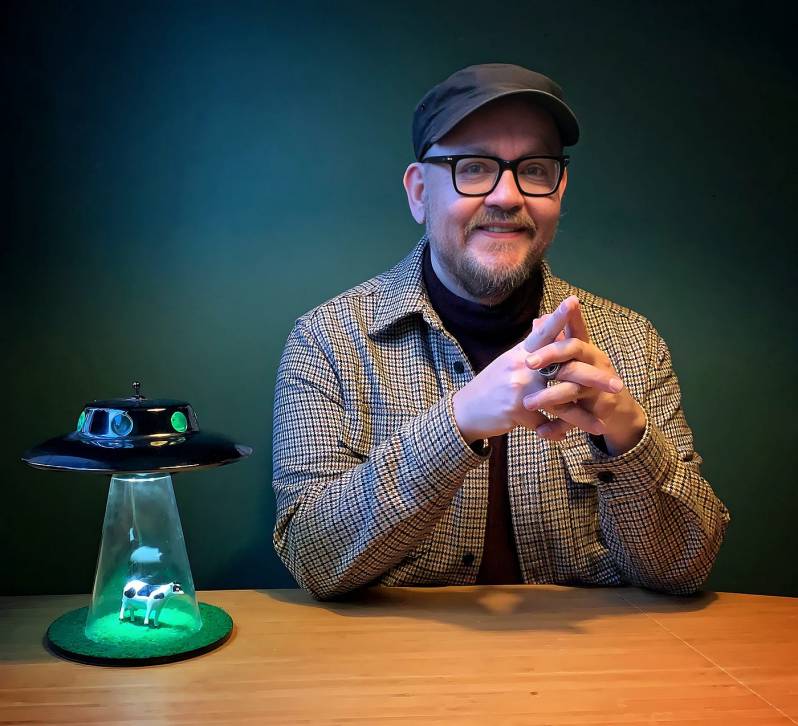
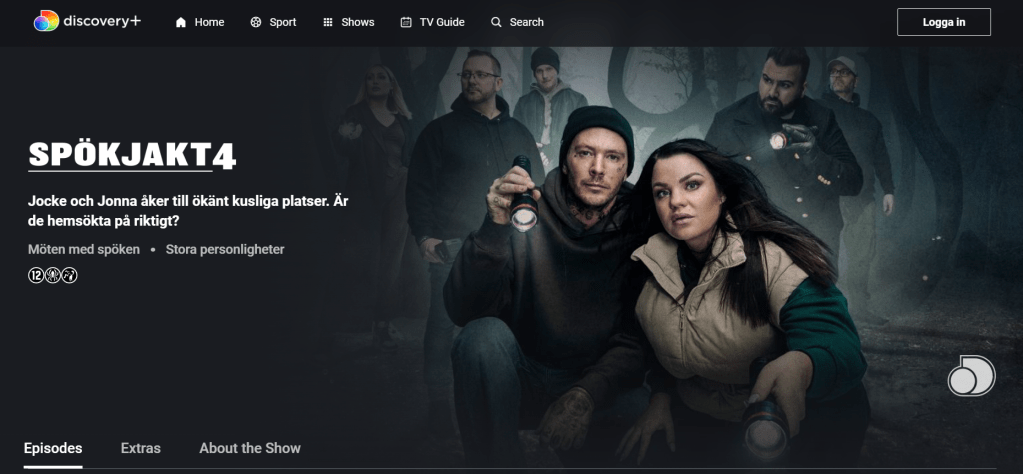
But sometimes, fortunately, some manage to bring the paranormal out of the closet in which it is carefully confined, and to reach the general public. It is a very precious achievement, and every time a source of inspiration. That’s why I asked Fred Andersson, whose work we mentioned in our recent article on trolls and certain Scandinavian fantastical creatures. Fred Andersson has been a writer and producer for Swedish television for 20 years. He has collaborated on very popular shows, while becoming one of the best specialists in strange and unexplained phenomena in his country. Recently, he participated in a huge ratings success in Sweden, a program called Spökjakt, which explores places considered haunted in Sweden and around the world.
Thanks to Fred Andersson for agreeing to answer our questions
Strange reality : Where does your interest in the paranormal come from?
Fred Andersson: This is such a complex thing to answer, because I believe my interest comes from many different sources, experiences and partly my upbringing. My childhood was spent in what’s best called a “religious community”, some might call it a “sect”. I’m not, and have never been, a religious person, but being raised in this kind of environment made me get very close to both the belief in miracles, in some higher intelligence and other things. It was all pretty closed and as a child, hearing these things every day, made me feel attracted to stuff that was out of the ordinary. I didn’t believe any of it, I was highly skeptical as a kid, but the subject came pretty close. That and the idea that some subjects are forbidden, especially in a Christian community like that: ghosts, ufos, the paranormal in general – but also horror movies, sinful movies. All those things that I absolutely loved in secret at the time and now in the open. To hear from the pastors and elders that it was dangerous to be interested in the occult, in ghosts and other weird stuff, just made my interest in it even more intense. So in a way I’m thankful for my traumatic upbringing, it made me the person I am today.
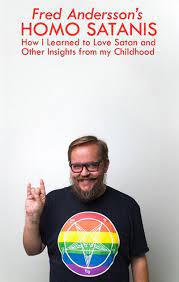

Fred Andersson looks back in these two books on his difficult childhood in a Pentecostal community and how it influenced his adult life.
Is it related to your job as a journalist?
Maybe we should ask the question like “did the paranormal make me a researcher or the researcher made me interested in the paranormal”? What came first, the egg or the hen? It’s a good question, and once again I believe it’s something made from grey zones, nothing is black and white. My interest has been with me since childhood, but there was a number of years where I almost felt embarrassed by it, to be honest skeptical. But here’s the thing, one gets older and – in my case – the realization comes that this is it, this is what life is about – so I had to focus my attention on something I feel is fun and rewarding. And that turned into working with the paranormal subject for television. The first show I worked with was Det Okända, In each episode we visited the haunted home of a family and a psychic medium communitated with the ghosts. In total there were 350 episodes, and I did 50 of them. During the filming of the show I met a lot of people who had experienced stuff that was out of the ordinary, not only ghosts – even if that was the focus of the production.
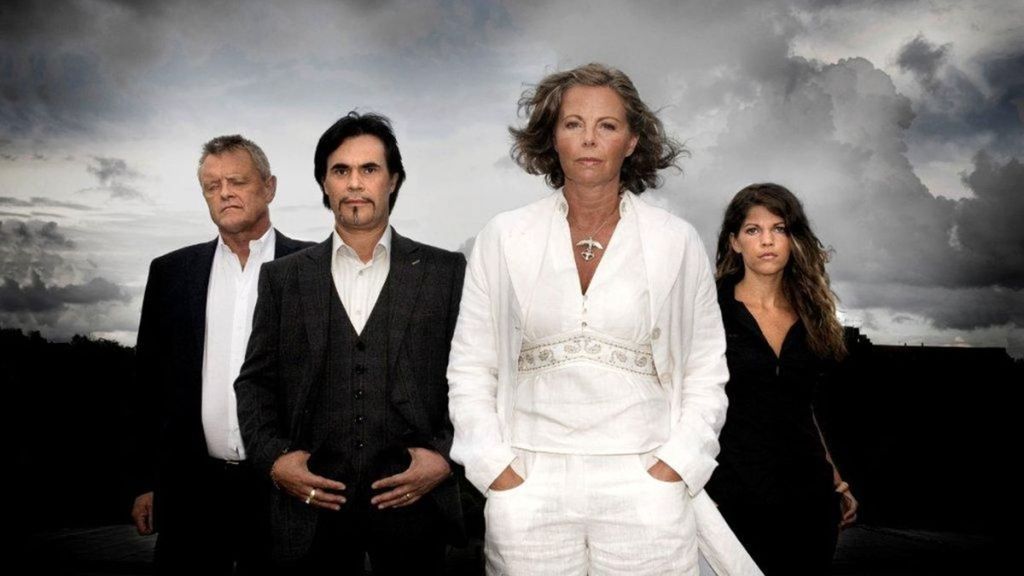
So my interest peaked, mostly because I love to hear about people’s experiences. A couple of years later, after suffering on productions I didn’t like, I decided to give up and change my career. Not knowing what I wanted to do I spent a few months out of work, until I decided to try out Mitch Horowitz 10-Day Miracle Challenge, and dammit… on the last day of those ten days I got a call and that was an offer to work with Spökjakt, a paranormal show that has since then turned into one of the biggest successes ever in Scandinavia. So you can say that I used a bit of magic to get that final push into working with something I truly enjoy.
How would you define this field of research?
Personally I feel that researching the paranormal, whatever that means (ufos, cryptids, ghosts etc) is more about being an historian. I don’t think anyone really can be an expert on it, as it constantly changes and often lacks evidence. A lot of it is about listening to stories, reading books and other texts, and just doing what we all love to do: speculate. I like that, as I feel that defining something also makes it a bit of a prison; one gets trapped in preconcieved ideas and concepts. If you ask, and I’m of course not alone in this, the paranormal is part of a phenomenon – and it’s all connected, maybe even the same on the surface, but when one goes deeper it goes in all directions, like fractals – and those fractals just keep multiplying. It never ends, which means – in my humble opinion – that there never will be an answer. Just when we think we’ve reached the goal another path opens up and off we go into the unknown once again.
What do you like most about your specialization?
Everyone has a story to share, and storytelling – fictional or non-fictional – is in my opinion the most important thing mankind has. To tell stories – and listen to them – is how mankind evolved so far. The rush of telling stories now, through second-long clips on TikTok etc is, however, dangerous. We’re too fast in sharing them, and this rush to get out new stuff makes them more shallow and, to be honest, less interesting. The depth disappears. So I always want time to listen and talk with experiencers, or time to tell weird stories to an audience. We need time to process stuff. So listening to stories and sharing them is, to me, the most important part of what I do, and especially to make those who have had experiences feel safe to tell them. I always take the personal experience very seriously. It’s important, a lot more important than technical stuff and physical evidence.
Can you explain why Sweden is such a prone country to strange phenomena?
On the surface Sweden has always been considered a very rational, secular country. But underneath all that, the “normality”, lies a deep connection to nature. Swedes love nature. We love our lakes and forests and bicycling, camping, the mountains up north, skiing in the winter and in general, outdoors activity. The presence of nature, which by itself is a magical environment, has created so many stories and experiences. I mean, our country consists of close to 70% forest, so it’s basically everywhere. I live in the suburbs of Stockholm, and if you ever visit Stockholm you’ll notice how there’s nature all along the train tracks, the commuter trains etc. My neighborhood might be considered a “rough” place to some, but it’s surrounded by forests and fields and water, only minutes outside the central areas. So I feel nature, geography, is of huge importance when it comes to paranormal experiences here. Where there’s a forest, there’s stories. The idea of Sweden as a secular, “rational”, nation might also be a way for people to go a bit underground with their beliefs and observations, and being underground – symbolically – can also inspire more obscure, weird and far out observations.
What is the most popular creature in Sweden ?
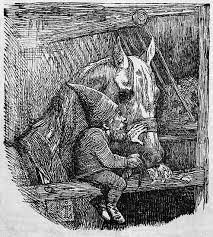
If you ask me it’s the tiny guy, Vätten, who is the most famous folklore figure in Sweden. Trolls have basically disappeared from the supernatural world, and maybe they’ve just given up and gone back into the mountains to be at peace instead of being disturbed by us humans. Vätte on the other hand is a small humanoid that’s still seen today, and there are quite many modern observations – often in the forest, and often encounters which are kinda surprising – for both the witness and the vätte. Vätte is like a small man, often with a pointy hat and beard – kinda like a classic gnome actually. They live under houses and barns on farms and its important to take care of the place to not upset them.
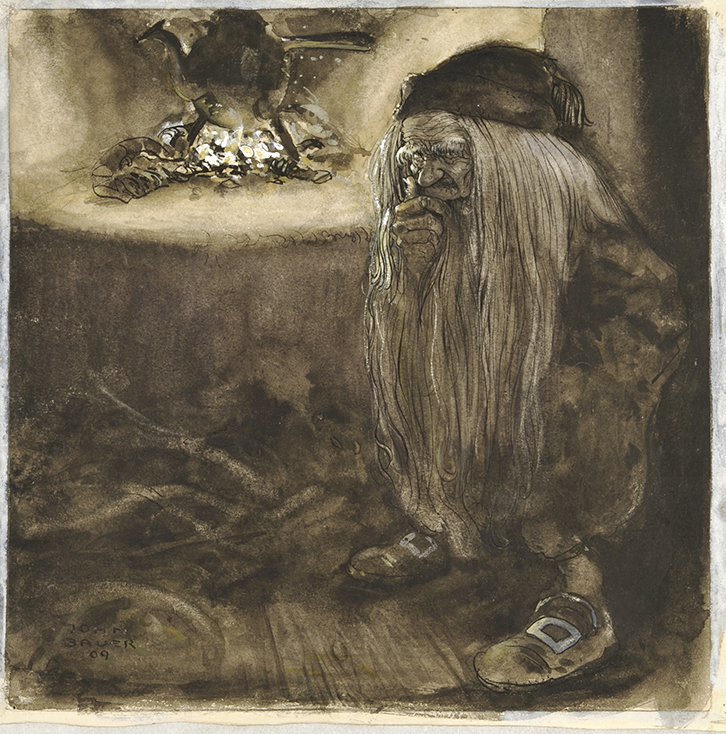
A man, Mats Nilsson, a veteran in UFO-Sverige, told me the other day how his rational father once told him how he encountered a vätte outside their barn. The vätte pointed at the barn and somehow communicated that the cow was standing right above his livingquarters and that whenever the cow peed it flushed his home with urine. So the father moved the cow and the vätte was never seen again. These are the old kind of stories, even my father’s grandmother met a vätte once, which is a legdenary tale in our family: “My father’s grandmother, Julia, was in her early twenties when she first arrived in Fagersta, in Västmanland county. The year was 1914, and she came by train to begin her new job as a maid for the postmaster and his family. His house was situated a few kilometers outside Fagersta at Fagersta Bruk. Her new employer had ordered a horse-drawn carriage to come and pick her up at the train station. She waited patiently, but the driver didn’t show up. There was either a misunderstanding regarding time or he had missed her somehow. Julia, even at the time a tough young lady, didn’t let this bring her down and she took her belongings, asked for directions, and started to walk. It wasn’t long after she saw someone in front of her, a small grayish being – a sprite, an elf, or fairy, whatever you want to call it, waving to her. She called it a « tomte, » which in Sweden can be described as a small, bearded man with a pointy hat – like a typical gnome. It kept going forward and she decided (yeah, she was tough) to follow him to wherever it might lead her. They walked (the gnome actually ran, because it had shorter legs) for quite some time until they came to a large house where the little critter ran into the yard and disappeared. She knew directly this was the place she was meant to go to – the house belonging to the postmaster. Moments later, a young driver with his horse and carriage came hurrying down the road and into the yard. He made excuses for the misunderstanding and that he missed picking her up at the station. He was obviously a young, sexy driver because they ended up falling in love and later spawning my father’s side of the family. And here I am, whether you like it or not…”
Could the Troll actually be the Swedish equivalent of bigfoot?
Well, that’s a good question. The public view of a troll nowadays is a big, burly, grotesque and hairy humanoid, but that’s more or less a modern creation that can be traced to the artist John Bauer. His troll paintings are magnificent. Before that the troll could be very human like, even stunningly beautiful and very elegant. I’d say that the old swedish legends of giants, which often reminds me about the later troll stories, are more similar to bigfoot. On the other hand, the trolls are less animalistic than bigfoot, just big, ugly human-like figure who could talk, build houses, crow crops or have their own (giant) animals. I’ve written down this encounter in one of my texts: “One curious, and quite humorous, incident was told by Johannes Karlsson, born 1863, to author and researcher Ivan Löfgren, during a meeting in 1932. The story is set in Bengtsfors, and the witness, Olle i Huvudgingen (who passed away in 1917) had an absurd, but frightening experience one dark night. Olle was on his way home and was just passing the Höljen lake when a herd of enormous cows came thundering out from the forest down to the water. Up on a nearby hill he saw a huge woman standing, knitting calmly with the needles shimmering in the moonlight, at the same time. He had to squeeze himself out from between the enormous and smelly cows, to escape. He later said he found the experience very eerie, and I do believe him.” So let’s say that modern folks saw a troll, they would probably see it as a bigfoot or some kind of big primate, as that’s what their perception is nowadays. What brings them together is of course the nature and wilderness and how the thrive in this environment, but other than that – and maybe their possible body size – they’re pretty different.
Can you introduce some other creatures that you like?
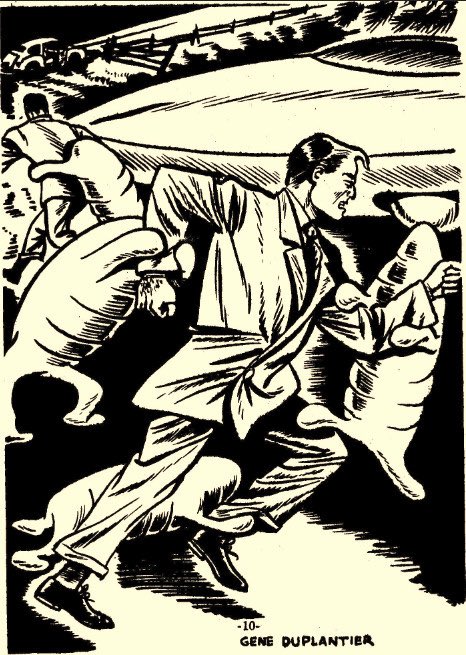
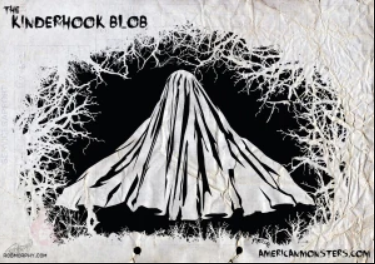
I’m quite fond of creatures that don’t look like creatures. One case that springs to mind is the Domsten blobs – a proven hoax, but just the thought of grey, doughy loaf-like creatures moving around is wonderful. There’s a similar case in France I believe, where a couple was out driving with their lake one evening and encountered a bunch of blobs crawling around on the road in front of them, in the light of the car. I do not remember any more details now. I absolutely love vättar – gnomes. I find them funny and disturbing and kinda trickster-like in their behavior, like naughty kids playing around. Dragons are so cool. And it’s way too few observations of them nowadays, but I do love the Italian encounters I write about in my text Dinosaur Disclosure: Large Lizards, Sinister Serpents and Dangerous Dragons in the Modern World. Just the concept of such creatures in a modern world fills me with joy, though I’m skeptical of them as physical, material creatures. Maybe they’re projections of our own imagination, coming to life?
You write about all kinds of phenomena. From magic to UFOs, also taking detours through mysticism and a bunch of strange stories that happened in Sweden. What is your method of investigation? What advice would you give to those engaged in the same process?
First of all, read books. Old books, vintage paperbacks the world has forgotten. There’s SO much information in these old paranormal books it’s absurd, and most of it is lost on the internet. Sure, a lot of the information is dated, but I promise you there’s stuff that will blow one’s mind. So I read a lot, I take notes and have a slightly chaotic folder-system on my online hard-drive where I write down every case/phenomena I find interesting and fill those folders, each of them, with notes, downloads and other things that I find. I’ve taught myself to save everything I find interesting – and not do it the next day. When I write I often write from memory first, a kind of rough draft to have some fun with the subject and not be stopped by looking in books and notes, and afte that I read it again and check the details, add more stuff – and kinda gives the text more meat. One thing I love is to do research on places around me. Are there any observations/experiences nearby where I can visit the location? It makes the research more personal and engaging. The fact is that people are experiencing things, whatever they are. We can look deep into religion, physics and other abstract things, so why not ghosts, ufos and cryptids? They’re part of us, they’re a form of storytelling – a visual picture book we write ourselves. I personally believe that imagination is the most important thing we have, the stuff that makes us move – and they day we lose it we’re lost.
Can all these phenomena be connected in a way, that is, maybe each of them participates in changing our vision of the world, of ourselves, of our values?
While I don’t know anything, I can only speculate. And from that angle I’ll say that it might all be the same, a projection – still read – of our inner worlds and imagination. Manifestations of our subconscious maybe? And still something that might be physical. I see the phenomena itself as a white canvas and then it’s the experiencers who throws the pain at the canvas, and the paint is their own consciousness, the paint hits the canvas, create patterns and something is formed there in front of their eyes.
END

